When thinking of a trip to the Perito Moreno Glacier, the mental image is usually that of spring or summer: blue skies, long daylight, walks along the walkways well into the afternoon. It is the season when the majority of visitors go, and that is why it also dominates the photos and travel stories that circulate. But the Perito Moreno in winter is a different landscape — and for many travelers, a more striking one — that very few get to experience.
This note is for those who are considering a trip to El Calafate in the cold months of the year and want to know, with real information, what to expect.
What changes in the landscape
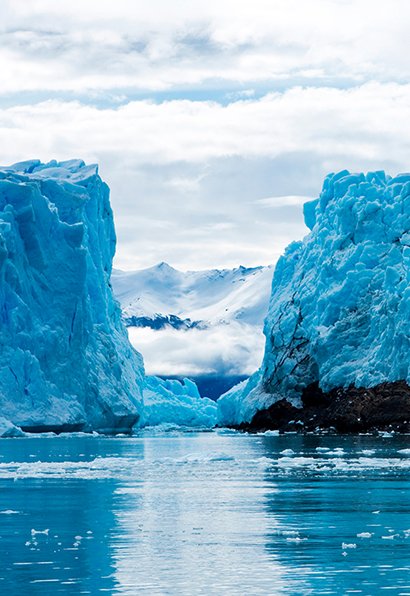
The most obvious difference is the snow. In winter, the Patagonian forest surrounding the glacier's face, the background hills, and a good portion of the observation walkways are covered in white, creating a contrast that simply does not exist in the high season: the bluish ice of the glacier against the white snow of the surroundings, instead of the intense green of the lenga forest in summer. It is a postcard that very few glaciers in the world offer in such an accessible way—the Perito Moreno is one of the few glaciers on the planet that can be reached by car and where you can walk to within meters of the face via walkways, without the need for technical trekking or an expedition.
The ice itself doesn't change drastically between seasons—the Perito Moreno is an active glacier year-round, with calvings (the famous ice ruptures into Lake Argentino) that can happen at any time—but the winter light, lower and more oblique even at midday, particularly accentuates the deep blues of the ice crevices.
The weather in El Calafate in winter
The winter months in southern Patagonia (June to August) bring low temperatures, with lows that often hover several degrees below zero and highs that rarely exceed 5-8°C, in addition to shorter days with fewer hours of daylight than in summer. The wind, which is a constant in the region throughout the year, tends to be more moderate in winter than in the summer months, when El Calafate is known for its almost constant strong gusts—a little-known advantage of traveling in the cold season.
Snowfall is frequent but generally not extreme in the El Calafate area itself (unlike more mountainous areas further west), and Los Glaciares National Park remains operational, with the Perito Moreno observation walkways open to the public year-round, except for occasional severe weather events.
It is advisable to travel with layered warm clothing, closed-toe and non-slip footwear, and check the forecast close to the travel date, as conditions can vary from one day to the next.
The advantages of traveling in the low season
Beyond the snowy landscape, traveling to the Perito Moreno in winter has practical advantages that do not exist in the high season:
- Fewer people. October to March is the peak season, with walkways and access points considerably more crowded. In winter, the experience in front of the glacier is much quieter and more personal.
- Better availability. The highest-end accommodations in El Calafate, which in high season are usually booked months in advance, have more availability and date flexibility in winter.
- Excursions with lower demand. Activities such as Minitrekking on the glacier also operate in winter (subject to weather conditions), with smaller groups.
What to consider before traveling
Not everything in winter is an advantage. Daylight hours are noticeably shorter —the sun can set before 6 PM in June and July—, which shortens the available window for outdoor activities and boat tours on Lake Argentino. Some longer excursions or those that depend on specific ice conditions may have reduced availability or be suspended on days with adverse weather, so it is best to confirm operations when booking. And the cold, while not extreme for anyone traveling prepared, is real: it is not a “mild” winter destination.
For those who value tranquility, photography, and a less crowded experience over the comfort of long summer days, these conditions are, in fact, part of the appeal — not an obstacle.
El Calafate in winter, from a Luxury Camp
Experiencing this season from accommodation designed for the Patagonic cold completely changes the experience: returning from the snowy walkways to a warm atmosphere, with views of Lake Argentino and the white-covered Patagonic steppe, is a postcard in itself. Pristine El Calafate is designed for just that — the stay as an extension of the glacier experience, not just a place to sleep between excursions.
It should be clarified that Pristine's proposal in Calafate is oriented toward the Argentine market: it is a destination that is experienced and lived differently than Iguazú or Salinas Grandes, with its own identity within the portfolio.
If you are considering a trip to El Calafate in the coming winter months, the Pristine's Calafate page It has the proposal details and updated availability.